
Maqolalar · 11-avgust, 2026 · 10 daqiqalik oʻqish
Why here
People ask why we are building a school twenty minutes outside the centre of Samarkand. The answer starts in 1991, on seven sotok of dry ground that was given to my mother in a year when there was nothing in the markets.
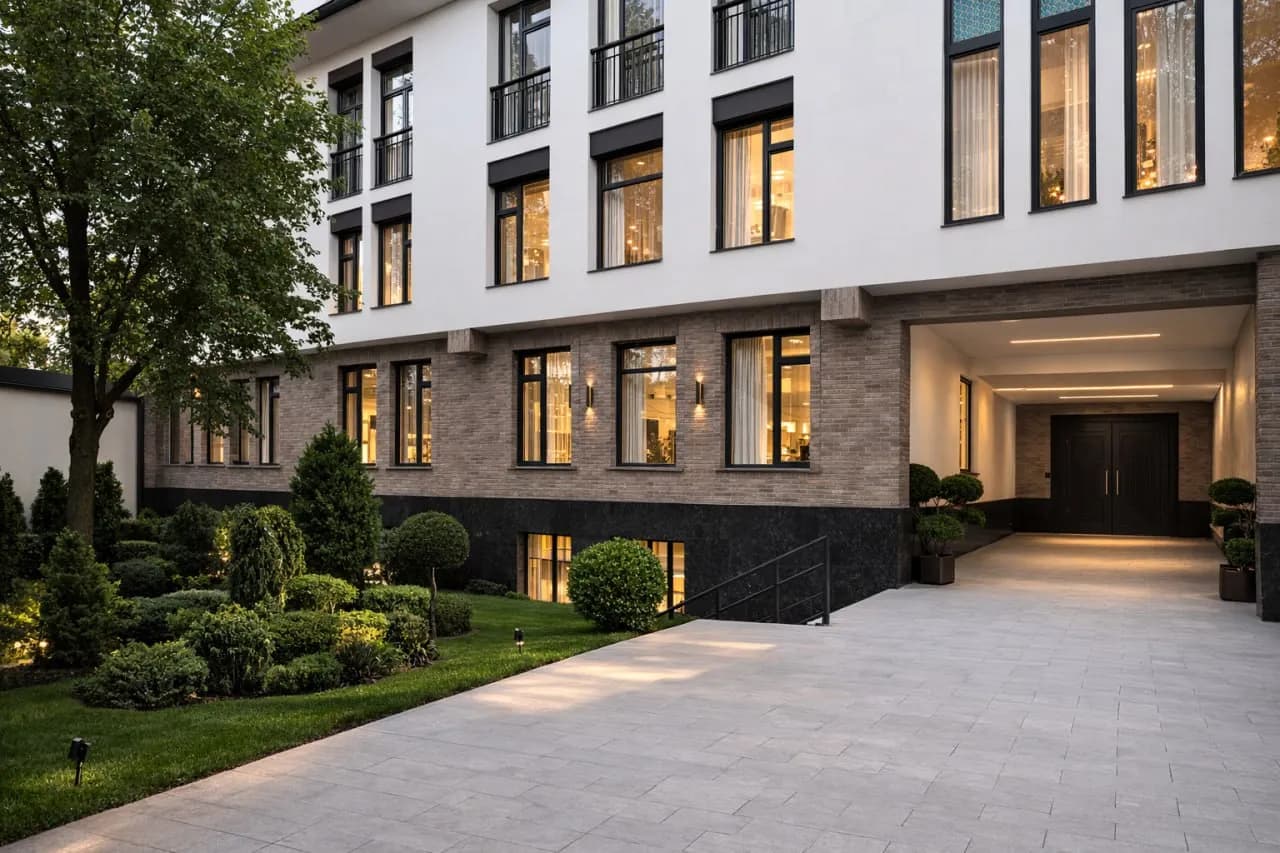
Towards the end of the Soviet Union the kolkhoz came apart and there was very little in the markets. The state’s answer was to give people ground. Not as a reward and not to anybody in particular — plots were handed out to families across Uzbekistan so that they could feed themselves. Half a million families were given new land. Ours was one of them, on the edge of Qo‘shtamg‘ali — seven sotok, seven hundred and eighty square metres. My mother’s name went on it.
She had been teaching mathematics for eighteen years by then. Algebra, geometry, sinus and cosinus, often two shifts in one day. None of that had anything to do with it. She was given the land for the same reason as everybody else on that road, which was that there was nothing in the shops to buy.
I was seven. I remember walking out to the plot with my father and my mother, and I remember that it was near my aunt’s house, which is the only reason a seven-year-old cares where anything is. Before that I knew the area for other reasons. My cousins Orzu and Jurabek and I used to walk the cows out that way. With my other aunt I went to the kolkhoz fields where my sisters and half our relatives picked tomatoes for the state. I went barefoot. The ground was so dry it had gone pale.
My parents planted tomatoes. Then chickpeas, potatoes, courgettes, cabbage, onions, carrots. Teachers on weekdays, farmers on their day off. Four daughters and a son to feed.
We carried it home in old sacks that had been turned into bags. Forty minutes on foot to the bus, then the bus, then a second bus, then walking again, until we reached our small house in Namozgoh. I have flown across the world since then and I have never carried anything as far as I carried those bags.
Salom bobo’s key
The land sits near two canals, Obi Rahmat and the Siyob. They take their water from the Dargom, and the Dargom takes its water from the Zarafshan, and the Zarafshan begins as ice in the mountains of Tajikistan. So what eventually came down our gutter had already travelled a very long way before anybody in our mahalla argued about it.
Close is not the same as connected.
In 1994 I was ten years old and my job was the water. Salom bobo had the key to the pump. You went to him, and if he agreed, the water came into the gutter, and then the water was yours only for as long as you stayed with it. So I walked beside it with a hoe. Barefoot, the whole way, closing the small breaks in the earth where it wanted to escape into someone else’s field, until it reached our plot and I could stop.
Nobody explained to me that this was a lesson. It has taken me thirty years to notice that it was the only one I really needed. The water exists. The mountains are full of it. What is missing is somebody willing to walk the whole distance beside it and make sure it arrives where it was going.
Nothing about that has changed. Somebody sees where the water ought to go, and then somebody has to walk beside it — through the drawings, the permits, the inspections, the winter, the long conversations about steel. That is what the last three years have been. I am still walking next to the water. I have not put the hoe down.
The walls we built then were pakhsa — mud and straw and earth, laid up in courses by strong men who came down from the mountain villages to do it. I watched them work. They were not educated men and they were extremely good at what they did, and I have never since believed that those two facts are related.
One hundred and fifteen years
My mother is Safiya Samadova. She was born in 1952, the year before Stalin died, in a republic that grew cotton for everybody else and mathematics for nobody in particular.
She began teaching in September 1973, at twenty-one, at School No. 25. Picture that. A girl barely older than the tallest boy in the room, chalk in hand, forty faces waiting to see whether she would last the week. She lasted fifty-three years. School No. 47 after that, then 93, then 65, always mathematics. When the money would not stretch she took on craft lessons as well, and there was a period when she stood in for the school cleaner, because there were five of us at home and she was not proud in the way that would have stopped her. She officially retired in 2005. She is still teaching.
She is also one of the reasons this school exists. Not because of the land — she gave that without discussion, the way she gives everything. Because of what she has been for fifty years in our family and among the women around her. When I told her what I wanted to build, she did not ask how it would be paid for. She said she would like to take a few lessons here herself. She wants to talk to women about women.
My father is Abdurahim Samadov, born in December 1944, in the last winter of the war, in a country that was starving and feeding other people’s children at the same time. More than a million and a half evacuated people had come into Uzbekistan by then, two hundred thousand of them orphans, and they were not all sent to institutions. Ordinary families took them in. Samarkand region alone received something close to ninety thousand children — Russian, Ukrainian, Polish, Jewish, Latvian, Moldovan. On the twenty-second of January 1945, when my father was about a month old, eight hundred tons of flour and two hundred tons of wheat were signed over to keep them alive.
That is the house he arrived in. He began teaching in 1964, the autumn Khrushchev was removed. First in a hospital, then in schools. Radio engineering to begin with, which was then the fastest way news reached a village, and English afterwards for the rest of his life. He officially retired in 2004. He is also still teaching.
Teaching did not pay. So he took a second job, and a third. One of them was photography. In the evenings he stood at an enlarger and brought other families out of the dark — weddings, sons in uniform, the pictures people keep. He did that so there was bread on our table.
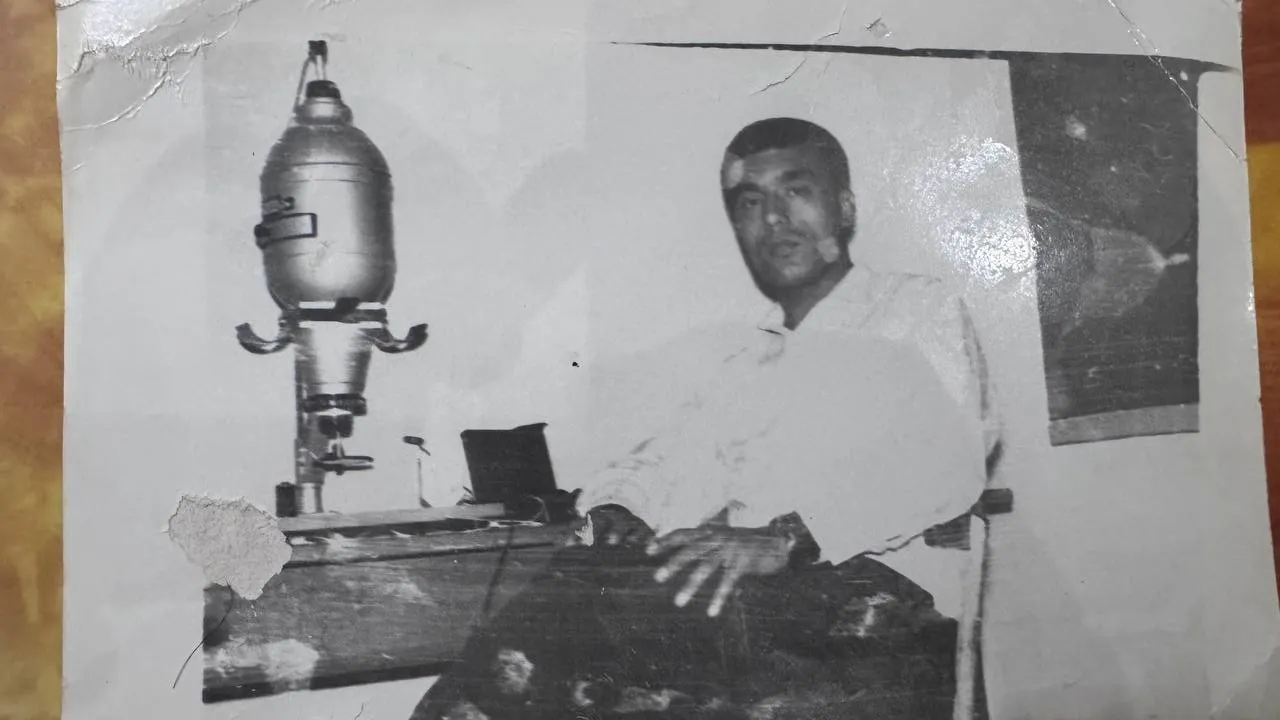
Fifty-three years and sixty-two years. One hundred and fifteen years of teaching in one house.
I asked them once how many students they had taught. My mother said, “We did not count.”
Our house had books on wooden shelves built into the walls, and in the evenings it had other people’s children in it, because my father gave English lessons at home. He taught our daughters. He taught girls from the village, and boys too. And he did not only teach English. He taught how to be a person — modesty, humility, how to behave when you have something and the man across from you does not.
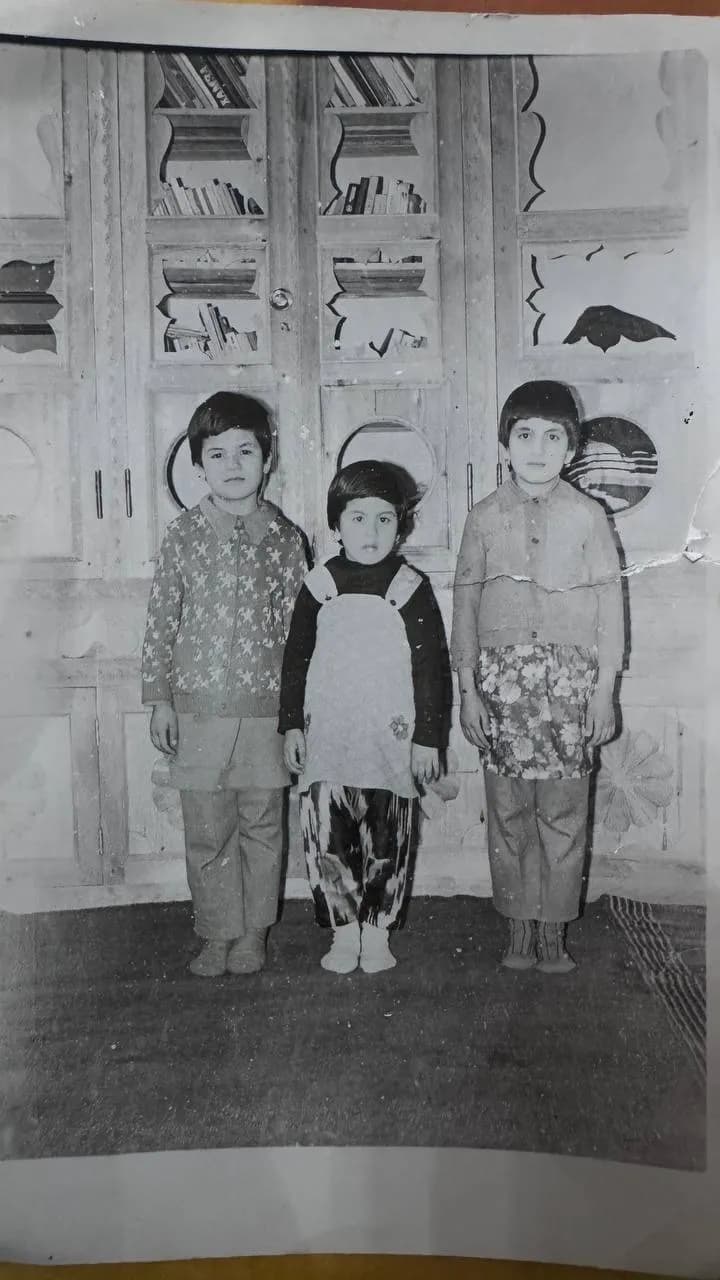
He was born the year this country shared her flour with children who were not her own. He has spent sixty-two years doing the same thing with a different resource. I did not understand for a long time that I was being shown a model. I thought it was just my parents.
Neither of them has really stopped. The paperwork says 2004 and 2005. The house says otherwise. For as long as I have been an adult there have been lessons going on in it, on and off, whenever somebody needed them — a neighbour’s son before an exam, a girl who could not follow the algebra, whoever knocked.
What has changed is who sits at the table. The students are grandchildren now. My father is still explaining English to them, my mother is still setting them problems, and neither of them charges anybody anything or thinks of it as remarkable.
Not every child grows up in a house with two teachers in it. Very few get to watch their own daughters grow up in the same lessons. I know exactly what we have been given, and I am not going to pretend I earned it.
The girl in Buka
My first time guiding was in 2001, in Samarkand, one Japanese man. I was a volunteer and I was not paid. Then ten years abroad as a migrant worker and a student, which is its own education and not a gentle one. For the last fifteen years I have guided across Central Asia, four hundred travellers or so in a good year. Somewhere near six thousand people.
In 2018 I was leading sixteen retired Americans on a twenty-eight-day journey. We stopped in Buka, not for any reason on the itinerary, only because there was a market and I wanted them to see it.
I bought warm bread from a woman whose work is to sell bread in the morning and then go home and work again, for her children. That day she had nobody to leave her daughter with, so the girl was there beside her.
Our bus was a Golden Dragon, and sixteen Americans came down out of it into a village market. I doubt the girl had ever seen travellers before. We were the only group there, and almost certainly the only one that year. She stared. Marelea from Los Angeles — shorts, blonde hair, sunglasses — greeted her, because my travellers do what I do, and I greet everybody. The girl was not shy for even a moment. She asked why we had come. What we were doing in her village. Who we were.
Then she turned to me and asked, in Uzbek, whether we would like some bread. And she gave it to us. A gift, from a family that sells bread because it must.
I asked what she wanted to do when she grew up.
She said she wanted to be a traveller.
She meant it as a profession. She had watched people arrive in a bus, look at beautiful things, be greeted warmly, and leave, and she had concluded that this was a job somebody had, and that it was the best one she had ever seen.
She was not wrong that it is a job. She was only wrong about who is allowed to have it.
I have three daughters. And I know how many young women in Samarkand have a plan they have never once said out loud, because saying it out loud is the dangerous part — after that, somebody might ask how it is going.
Twenty minutes
Segoh street is about twenty minutes from the Bulvar. In Samarkand terms, that is far.
When the neighbours here understood what was being built, they asked me, quite reasonably, whether I really thought anyone would come all this way to our mahalla.
That question is the reason the school is here.
A school near the centre is convenient for the families who already have options. Out here are the girls who are quick-witted and multilingual and full of plans, whose plans stop at the front gate, and whose fathers will not have them crossing the city alone twice a day. Bring the school to the centre and you lose exactly those students. That is not a compromise I am willing to make in the first year, and it is not one I will make later either.
So we build on my mother’s land. Ground handed out in a hungry year so that one family could eat, farmed by two teachers on their days off, watered by a ten-year-old with a hoe.
Seven sotok. It is not much ground. It fed five children. In 2027 the same ground starts taking hundreds more.
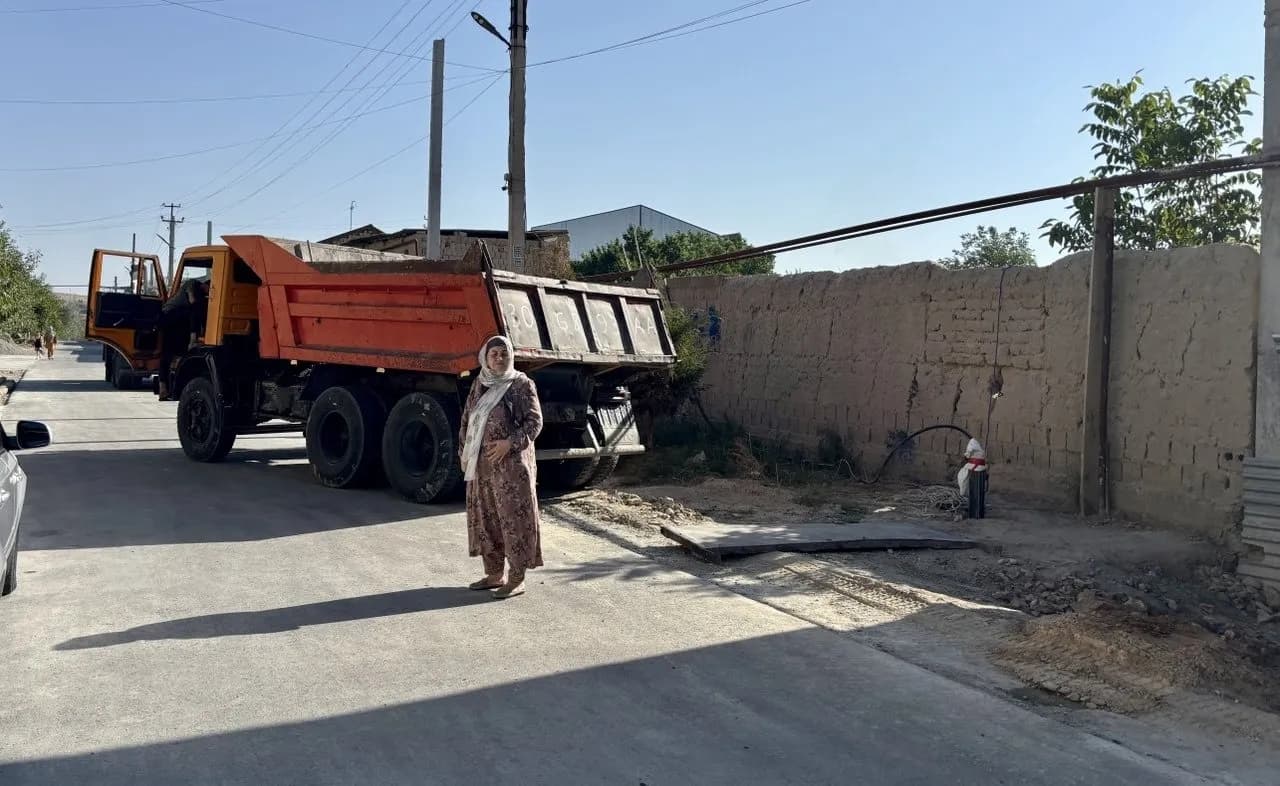
As I write this the steel is going in. Formwork, reinforcement, men walking on planks across rooms that are still only lines in the ground. Nothing here looks like a school yet.
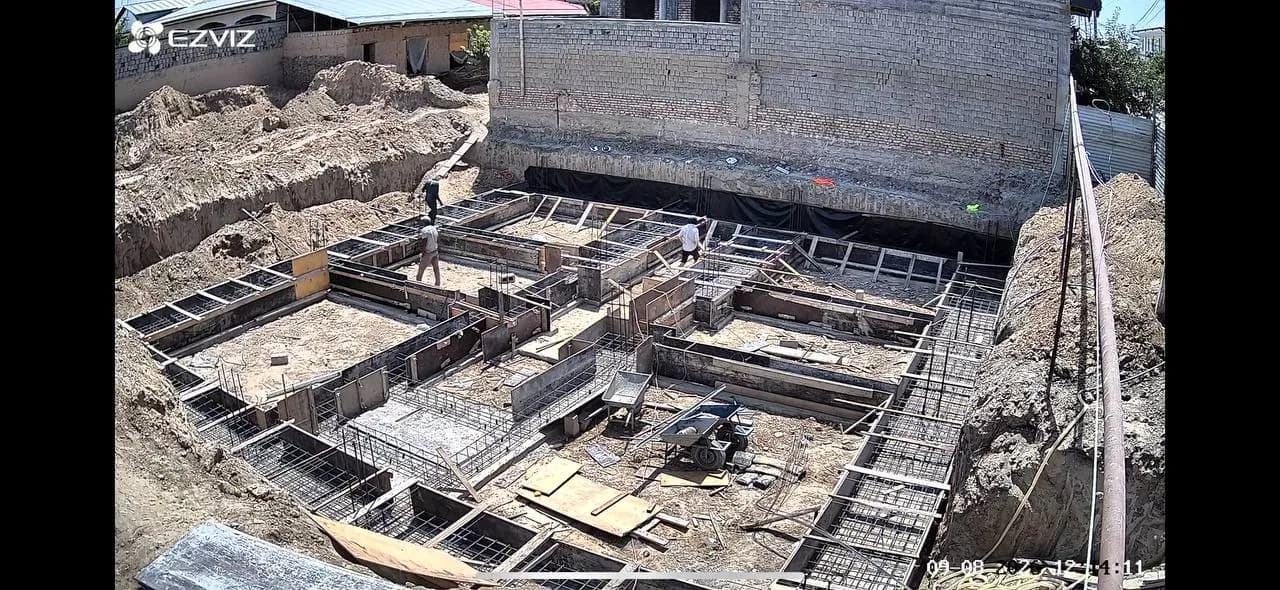
When the water comes to this plot again it will be arriving for the fourth generation to work it, and this time what grows here will be trained women.
Twenty minutes is not far. It only looks far to people who were never planning to walk it.
— Abdu Samadov, Principal
Javob yozish
Har bir javobni bu yerda paydo boʻlishidan oldin oʻqib chiqamiz, shuning uchun u darhol koʻrinmaydi.